Inside the Massive Keukenhof Gardens That Only Open for Eight Weeks a Year
Keukenhof is just outside Amsterdam and spans about 32 hectares (79 acres). Each year, around seven million flower bulbs are planted by hand, with tulips leading the show. The garden features roughly 800 varieties of tulips, alongside roses, orchids, crocuses, hyacinths, and cherry blossoms.
That scale comes together through careful coordination. Around 100 bulb companies and nearly 500 growers take part, each contributing plants and designing sections of the displays. What you see during those eight weeks is results from months of planning, planting, and timing behind the scenes to make everything bloom at the right moment.
The Work Starts Months Before Opening Day

Image via Getty Images/ptaa2010
Gardeners spend months designing layouts, selecting specific flower types, and ordering bulbs well in advance. Before planting begins, older bulbs are removed to make room for the next cycle.
Planting itself takes about three months, with every bulb placed by hand. The team, which includes around 40 gardeners, works through autumn to ensure everything is ready for spring because timing is just as important as placement.
Tulips bloom for about 1.5 weeks, which would normally limit how long they can be seen. To avoid that, gardeners plant bulbs in layers and stagger early- and late-bloomers. That technique keeps the garden in bloom throughout its short season instead of fading after a single peak.
Why the Garden Only Opens for Eight Weeks
Keukenhof operates as a seasonal “spring park,” and this decision is tied directly to how the flowers behave. The garden opens for about eight weeks each year, typically starting in mid-March. For the 2026 season, it runs from March 19 to May 10, with daily hours from 8:00 a.m. to 7:00 p.m.
Each part of the season offers something different. Early weeks bring crocuses and daffodils, mid-season shifts to hyacinths and early tulips, and by the final stretch, the outdoor tulip displays reach full bloom.
The limited schedule also creates demand. Tickets are often tied to specific time slots, and busy days can sell out in advance. Opening day in 2026 already saw lines forming as visitors arrived early to catch the first blooms.
What It’s Like to Walk Through It
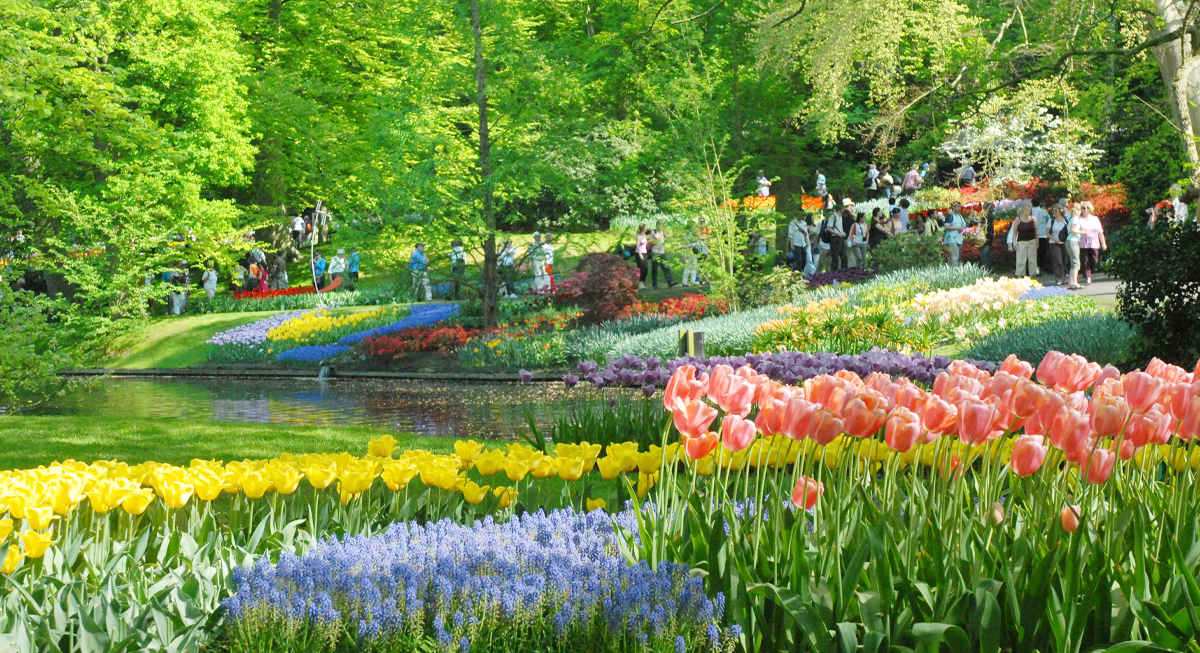
Image via Wikimedia Commons/Cszmurlo
Once inside, the layout makes it easy to move through different sections without feeling rushed. The garden includes about 15 kilometers (10 miles) of walking paths, along with themed pavilions that highlight specific flowers. The Beatrix Pavilion focuses on orchids and anthuriums, while the Oranje Nassau Pavilion features roses, chrysanthemums, and daffodils.
Displays change weekly, so even repeat visits can feel different. Beyond the flower beds, over 100 sculptures are placed throughout the grounds, which makes the park one of the largest sculpture gardens in the Netherlands. A historic windmill built in 1892 also stands on-site.
Families tend to stay longer thanks to features like a maze, a playground, and a petting zoo. For those looking to explore further, bike routes and boat tours run through the surrounding tulip fields, extending the experience beyond the main garden.
A Tradition That Goes Back Centuries
While the modern park opened in 1949 as a showcase for Dutch bulb growers, the land itself has a longer history. It dates back to 1638, when Adriaen Maertensz Block owned the estate. In 1857, landscape architects Jan David Zocher and Louis Paul Zocher redesigned the grounds, shaping much of what visitors still see today.
The park opened to the public in 1950 and drew 200,000 visitors in its first year, paving the way for its long-standing popularity. More than seven decades later, the formula remains the same: a short season, a massive floral display, and a level of precision that keeps everything on schedule.