Deep in the Mexican Desert Lies a Mysterious Dead Zone Where Clocks Stop and Radio Signals Completely Vanish
In the remote stretches of northern Mexico’s Chihuahuan Desert, stories circulate about a strange patch of land where radios fall silent, compasses behave erratically, and strange lights sometimes appear in the night sky.
The place is known as the Zone of Silence, La Zona del Silencio, a rugged desert region inside the Mapimí Biosphere Reserve where science, rumor, and decades of storytelling have blended into one of North America’s strangest geographic legends.
A Remote Desert Where Signals Seem to Disappear
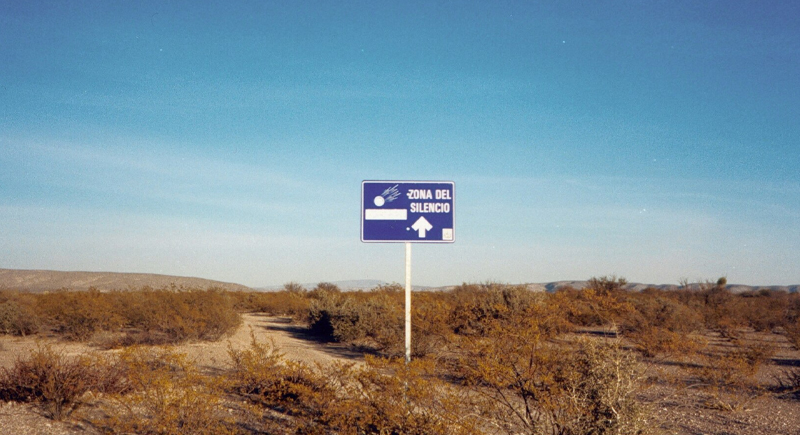
Image via Wikimedia Commons/Cryptocône
The Zone of Silence is situated in the Bolsón de Mapimí, a large desert basin that crosses the Mexican states of Durango, Chihuahua, and Coahuila. The region lies inside the Mapimí Biosphere Reserve, a protected area covering roughly 342,000 hectares of desert habitat.
Despite its reputation for mystery, the reserve is better known among scientists for its ecology. More than 400 plant species grow across the desert landscape, while around 200 species of birds and dozens of reptiles and mammals live among the cactus and rocky hills. The endangered Bolson tortoise and the Mexican fringe-toed lizard are two of the region’s most recognizable residents.
The desert itself carries a long geological history. Millions of years ago, the entire basin lay beneath an ancient sea, leaving behind layers of sedimentary rock rich in minerals. Some of those deposits include magnetite and other magnetic materials, which many people believe could play a role in the strange electronic interference reported in the region.
How the “Zone of Silence” Got Its Name

Image via Canva/pixelshot
The modern legend surrounding the desert area began in the twentieth century. In 1966, a research team from the Mexican oil company Pemex arrived in the region to conduct exploration work. The expedition’s leader, engineer Augusto Harry de la Peña, became frustrated by repeated problems with radio communication during the trip. The radios struggled to pick up signals across the empty landscape, and de la Peña began referring to the location as the “Zone of Silence.”
The name stuck and what started as a casual description gradually transformed into a label that suggested something far stranger than weak reception in a remote desert.
Meteorites and a Rocket Crash That Fueled the Legend
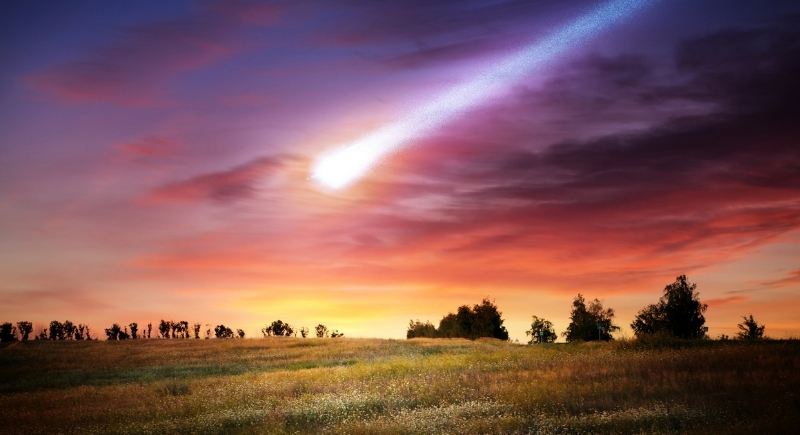
Image via Getty Images/Trifonov_Evgeniy
The desert already had a reputation for unusual celestial events. Several large meteorites fell in the surrounding region during the twentieth century, including impacts recorded in 1938 and 1954 on the same ranch in southern Chihuahua. Another major meteorite fell in 1969 near the Allende Valley. These space rocks contained iron and nickel, metals that some people believe may contribute to magnetic irregularities in the surrounding terrain.
The story grew dramatically in 1970 when a U.S. Athena re-entry test rocket launched from Utah suddenly veered off course. The rocket was supposed to land near White Sands Missile Range in New Mexico, but instead it traveled hundreds of kilometers farther south and crashed inside the desert basin. The unexpected landing triggered a major recovery effort.
Teams of American engineers arrived to locate the debris and remove hazardous materials from the crash site. The large-scale operation, complete with equipment, personnel, and temporary facilities in the desert, quickly captured international attention. Rumors spread that the rocket’s guidance system had malfunctioned because of unusual magnetic forces inside the mysterious desert region.
Official investigations later attributed the accident to technical problems with the rocket itself, but the idea that the desert somehow interfered with its navigation systems had already taken hold.
Strange Lights and Stories of Unusual Visitors
Once the rocket crash drew global attention to the region, more unusual stories began circulating. Ranchers and travelers occasionally described glowing lights appearing on distant ridges or moving across the night sky. Some visitors claimed that radios or compasses stopped functioning in specific areas.
A handful of reports went even further. Travelers occasionally described encountering tall, fair-haired strangers who appeared suddenly in the desert, asked for water, and vanished without leaving footprints. These mysterious figures became part of the region’s folklore.
None of these encounters has ever been confirmed, but they added to the reputation of the Zone of Silence as a place where strange things seemed to happen.
Science Offers a Much Simpler Explanation

Image via Canva/Aflo Images
Researchers working inside the Mapimí Biosphere Reserve generally take a far more grounded view of the desert’s reputation. Scientists who regularly conduct fieldwork in the region report that radios function normally when proper equipment is used. Communication problems are often attributed to the desert’s extreme remoteness, which puts it far from major radio transmitters.
The desert’s geology may still play a minor role in the strange reports, as magnetic minerals such as magnetite occur naturally in the surrounding rocks, and meteorite fragments containing iron and nickel have been found nearby. These materials could potentially interfere with compasses in isolated spots, though no evidence suggests they create a massive signal-blocking zone.
Atmospheric conditions can also affect radio transmissions in remote regions. Variations in the ionosphere and solar activity can temporarily disrupt radio signals, especially in areas with limited signal coverage.
A Mystery That Lives Mostly in Stories
Despite scientific explanations, the Zone of Silence continues to captivate travelers, UFO enthusiasts, and mystery hunters. The combination of desert isolation, unusual geology, meteorite history, and a dramatic rocket crash created the perfect setting for a modern legend.
Today, the Mapimí Biosphere Reserve remains primarily a scientific research area focused on studying desert wildlife and ecosystems. Biologists travel there to study reptiles, birds, plants, and the fragile desert environment that supports them.