Florida Spring Trails You Have to See to Believe
Spring is one of the best times to see Florida as it really is. The weather is still manageable, the water runs clear, and wildlife is easier to spot before the summer heat sets in. What stands out most is the variety. One trail follows calm water where alligators sit in plain view, while another leads down into a sinkhole that feels more like a rainforest than Florida. Each place shows a different side of the state, and it becomes clear once you’re there.
Myakka River Trail, Myakka River State Park
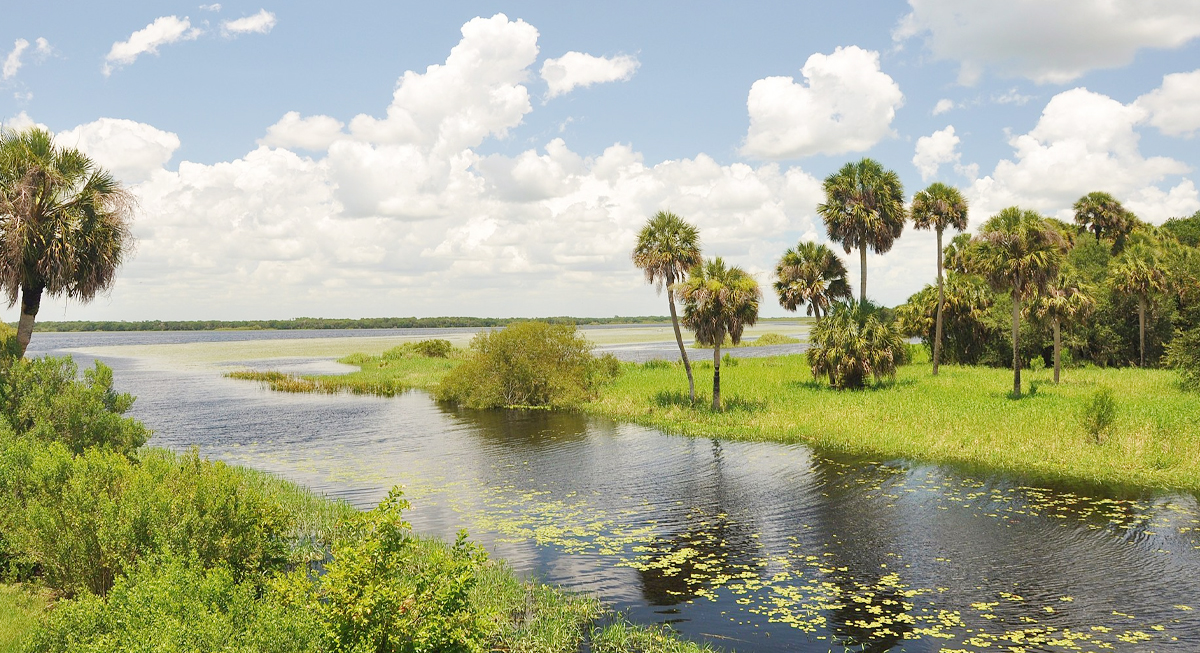
Image via Wikimedia Commons/Walter
Wildlife defines the experience along the Myakka River Trail, which stretches about a mile through one of Florida’s oldest and largest state parks. The path itself is straightforward, but the riverbank turns into a gathering place once spring temperatures rise.
Alligators leave deeper water to warm themselves along the shoreline, often remaining motionless while birds search for food around them. Watching the river becomes a real activity here.
Devil’s Den Spring, Williston
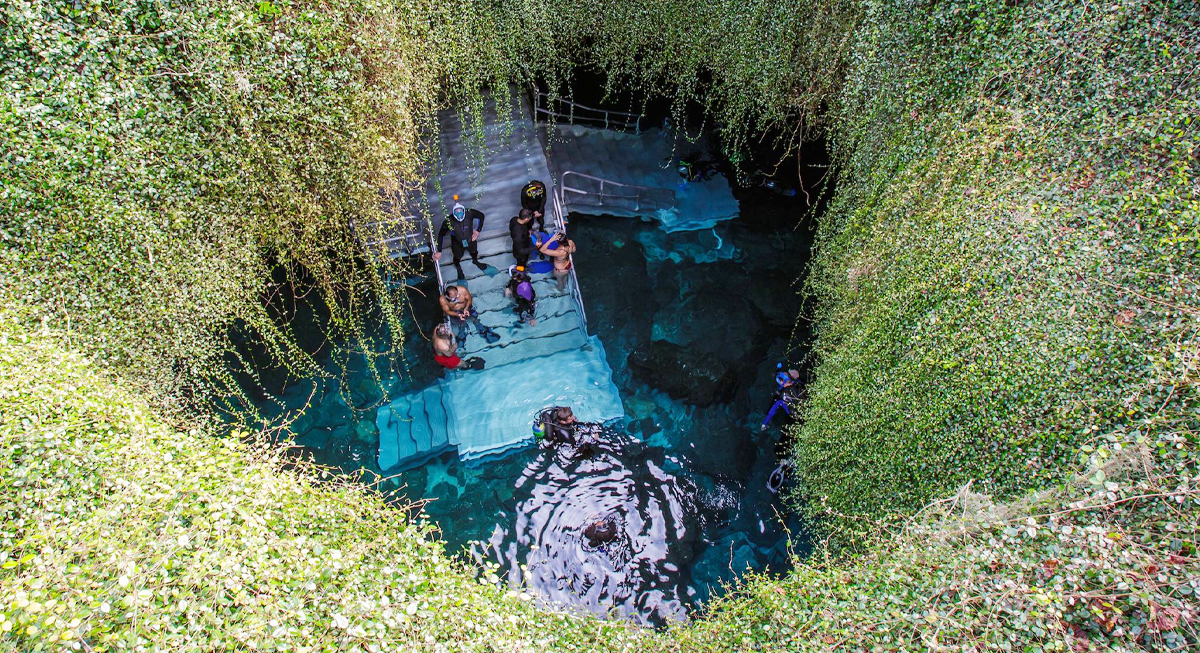
Image via Facebook/Devil’s Den Prehistoric Spring
Devil’s Den Spring doesn’t look like what most people expect from Florida. It sits inside a collapsed cave, with an opening at the top that lets sunlight fall straight onto the water. When you stand at the edge, you’re looking down into a circular chamber where the water shows a deep blue against the rock walls.
Fossils found here add to the sense that this place has been around far longer than the landscape outside.
Black Bear Wilderness Area Trail, Sanford
The Black Bear Wilderness Area Trail introduces hikers directly to Florida’s swamp terrain. Boardwalk sections guide visitors through wetlands that would otherwise be difficult to cross on foot, keeping the trail suspended above water and thick vegetation.
The seven-mile loop passes through a 1,650-acre refuge, letting you move through it while watching birds, turtles, and other animals navigate the same environment below.
Devil’s Millhopper Geological State Park
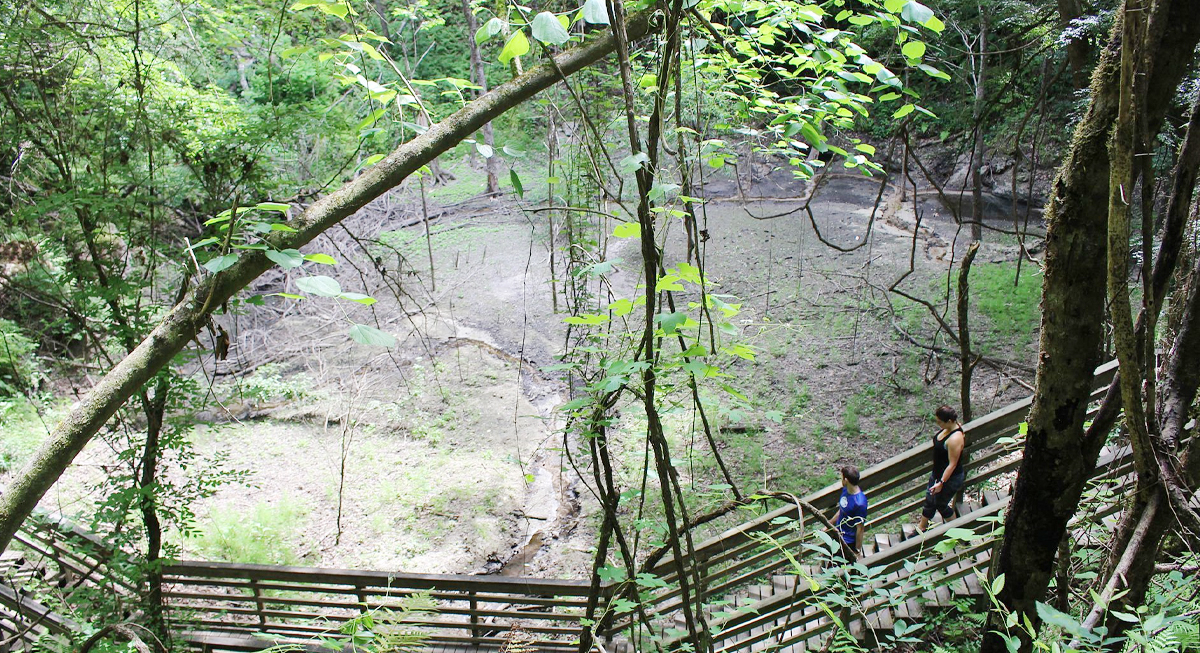
Image via Wikimedia Commons/Michael Rivera
Devil’s Millhopper Geological State Park stands out the moment you arrive. In north Florida, the ground opens into a 120-foot sinkhole that drops into a shaded basin below. A long staircase leads down, passing exposed layers of rock where small springs trickle through and support dense plant life.
The change becomes clear as you make your way down. The air feels cooler, the greenery thickens, and the setting starts to feel more like a contained rainforest than the pine forests you see across the rest of the region.
Prairie Loop Trail, Kissimmee Prairie Preserve
Kissimmee Prairie Preserve State Park offers a side of Florida that feels wide open. The Prairie Loop Trail runs through open grassland where spring wildflowers spread across the landscape, with yellow coreopsis often leading the display alongside other seasonal blooms.
With very little tree cover, the horizon stays open in every direction. That uninterrupted view makes the shifting colors of the prairie stand out more clearly as you move through it.
Ichetucknee Springs Trails, Ichetucknee Springs State Park
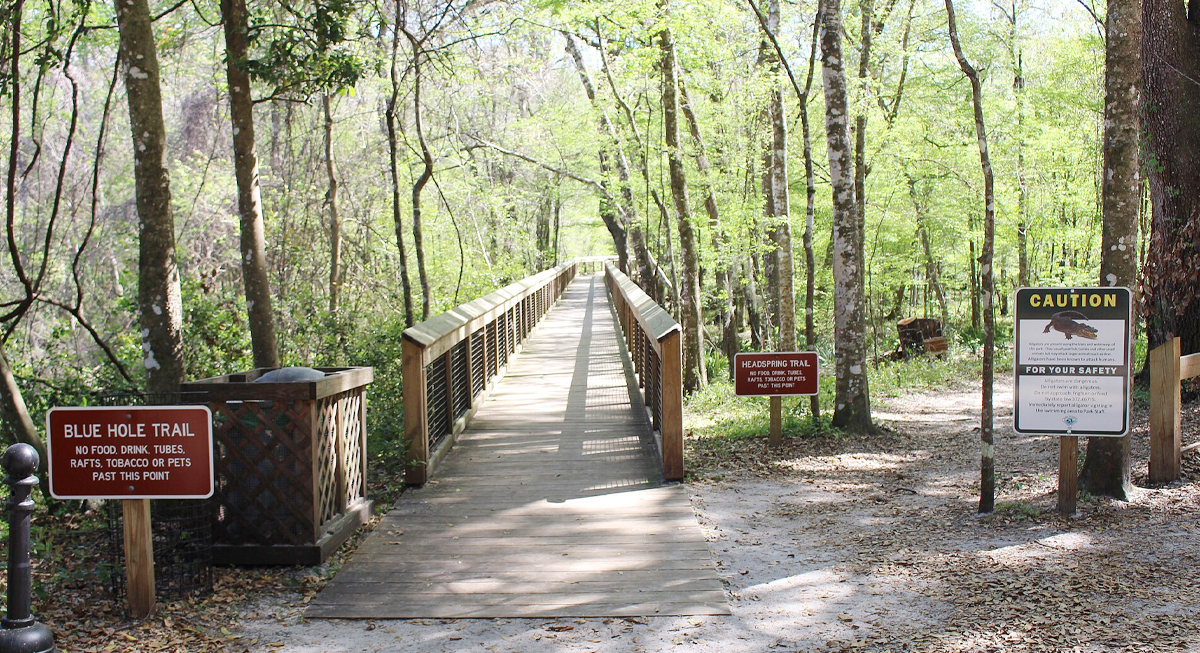
Image via Wikimedia Commons/Michael Rivera
The Ichetucknee River flows through forested land, fed by several natural springs, producing water that remains around 70 to 75 degrees Fahrenheit year-round. The river stays remarkably clear, allowing visitors to see the sandy bottom and aquatic vegetation even from the shoreline. Trails running beside the water offer repeated views of the current as it moves beneath tree canopies, while tubers and paddlers drift slowly along sections of the river.
Big Cypress Bend Boardwalk, Fakahatchee Strand Preserve
This path passes through old-growth cypress where tree roots rise from shallow water and trunks form tight clusters across the wetland—one of the most distinctive forest environments in the state.
Spanish moss hangs from branches overhead while filtered sunlight moves across the water’s surface. The atmosphere remains calm but visually dense, making it easy to overlook how large the forest actually is.
Rainbow Springs Trails, Rainbow Springs State Park
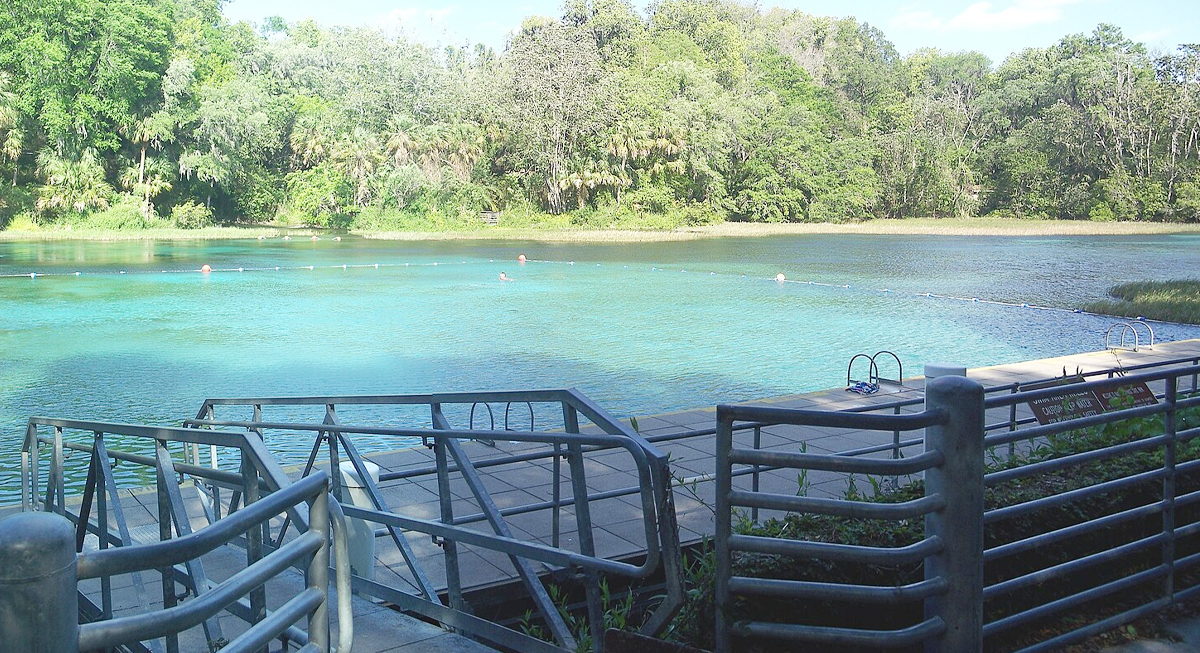
Image via Wikimedia Commons/Ebyabe
Rainbow Springs earns its name through the color of its water. Light refracts through the spring-fed river to produce shifting shades of blue and green that change depending on the angle of the sun and the depth of the channel. Trails along the river reveal these changes gradually. Waterfalls, gardens, and shaded overlooks create a series of viewpoints where the river appears slightly different each time.
Florida Trail, Big Cypress Section
The Florida National Scenic Trail runs more than 1,500 miles across the state, but its Big Cypress section provides one of the most distinctive hiking environments. The experience does not feel like a typical hike, though.
Portions of the route pass through shallow water, sometimes reaching knee- or waist-level, depending on seasonal conditions. Cypress domes rise from the wetlands, and wildlife frequently appears along the edges of the trail.
Ginnie Springs Area Trails
Florida’s water clarity is dramatically on display at Ginnie Springs. The spring basin holds water so transparent that the bottom remains visible even from the shoreline. Visitors often notice fish or divers beneath the surface before realizing how deep the pool actually is.
Paths around the springs provide multiple vantage points where the water’s color and clarity become the main attraction, especially when sunlight passes directly overhead.