10 Places on Earth That Look Like Alien Planets
You don’t need a rocket ship to visit another world. Right here on planet Earth, there are bizarre landscapes that defy expectations. They’re real places you could visit with nothing more than a plane ticket and a sense of adventure. Scientists study some of these 10 locations to understand life at the edges.
Danakil Depression, Ethiopia
Credit: Wikimedia Commons
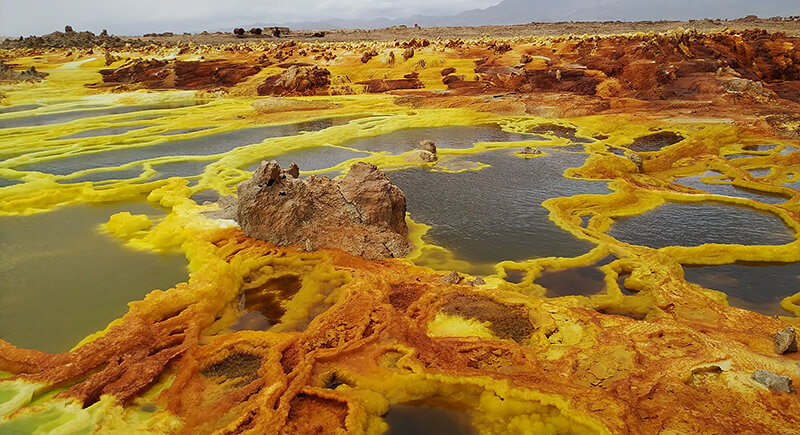
The air in the Danakil Depression carries sulfuric acid and chlorine gases, released from bubbling acid pools that stain the ground in vivid yellows and greens. This is one of the most geologically active places on Earth, where three tectonic plates are slowly pulling apart. Temperatures often reach 113°F. Despite the harsh conditions, microorganisms survive here, which is why NASA studies the area as a Mars analog for extremophile life.
Salar de Uyuni, Bolivia
Credit: Canva
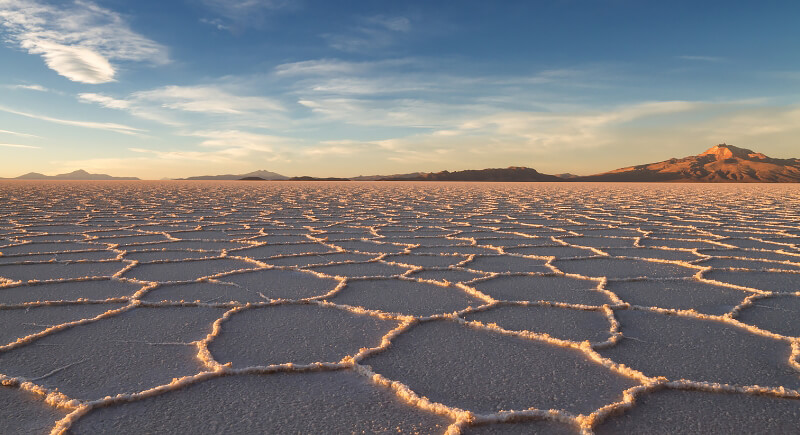
Salar de Uyuni covers about 3,800 square miles of bright white salt and is visible from space. It contains an estimated 10 billion tons of salt, with deposits several meters deep. During the rainy season, a thin layer of water turns the flats into a mirror-like surface that blurs the horizon.
Naica Mine Cave of Crystals, Mexico
Credit: Wikimedia Commons
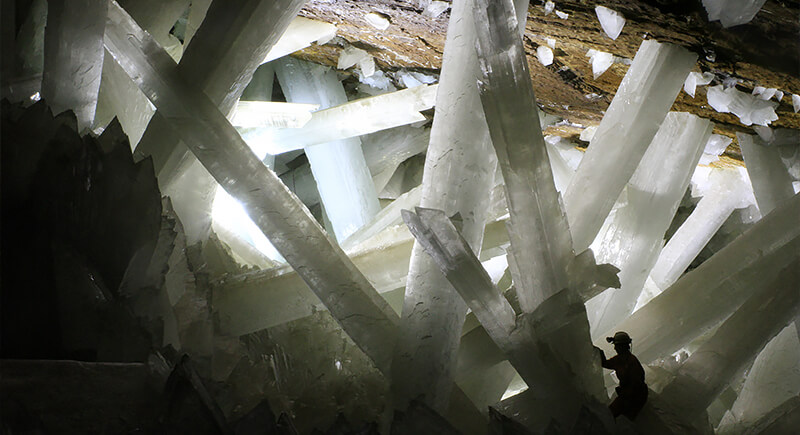
Discovered in 2000, the Cave of Crystals lies nearly 1,000 feet underground inside the Naica Mine. The chamber is filled with massive selenite crystals, some stretching over 30 feet long and more than 13 feet wide. These gypsum formations are still growing and are estimated to be several thousand years old. Because of the cave’s extreme heat and humidity, humans can only enter briefly and must wear specialized cooling suits to survive.
Kawah Ijen Volcano, Indonesia
Credit: Getty Images
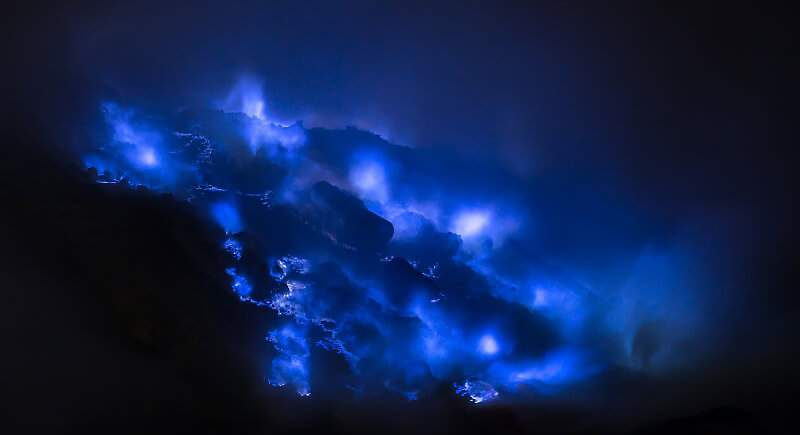
At Kawah Ijen, sulfur-rich gases ignite when they meet oxygen, creating blue flames that glow against the volcanic landscape at night. These flames produce the electric-blue streams often seen in photos. During the day, the volcano looks largely ordinary. Witnessing this phenomenon requires hiking in darkness, but the nighttime view reveals one of the volcano’s most unusual features.
Wadi Rum, Jordan
Credit: Getty Images
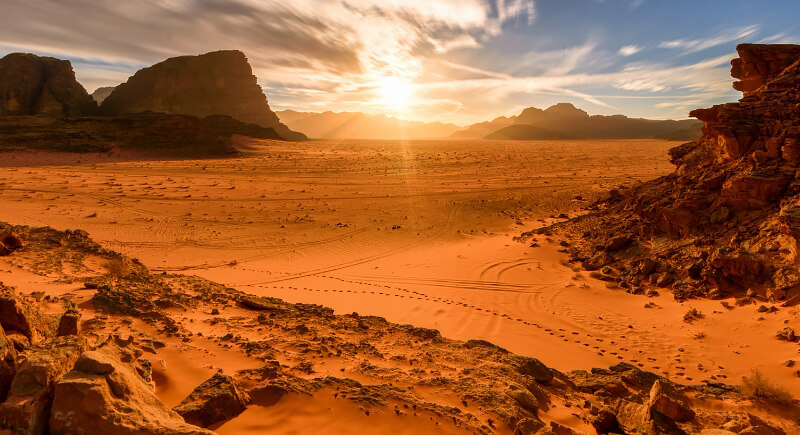
Hollywood filmed The Martian here because this 277-square-mile desert in southern Jordan looks like Mars. The name translates to “Valley of the Moon” in Arabic. British officer T.E. Lawrence called it “vast, echoing, and God-like” during the Arab Revolt. Space agencies use nearby deserts as training grounds because the terrain closely mimics the geology on Mars. Wind erosion sculpts arches and narrow canyons, and Bedouin communities still travel through the area.
Grand Prismatic Spring, Yellowstone National Park
Credit: Wikimedia Commons
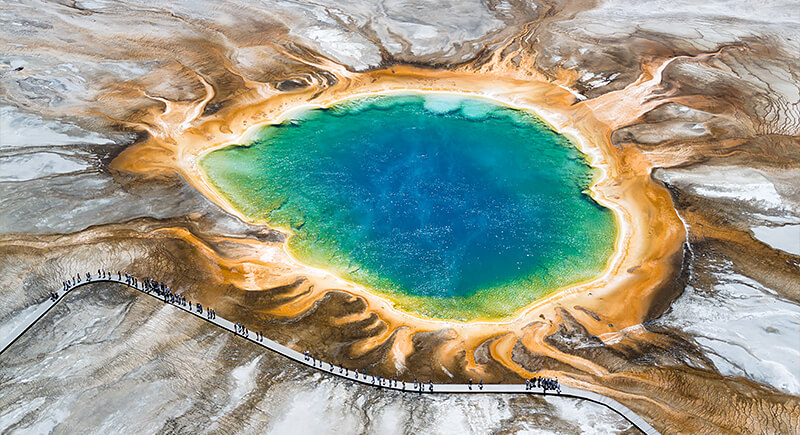
Heat-loving microorganisms called thermophiles create the vivid rainbow rings spanning up to 330 feet across this thermal feature. The National Park Service explains that colorless or yellow thermophiles colonize the hottest water at the center. Orange, brown, and green varieties populate the cooler edges. The center emits that vibrant blue color because it remains sterile due to the extreme temperatures.
Fly Geyser, Nevada
Credit: Wikimedia Commons
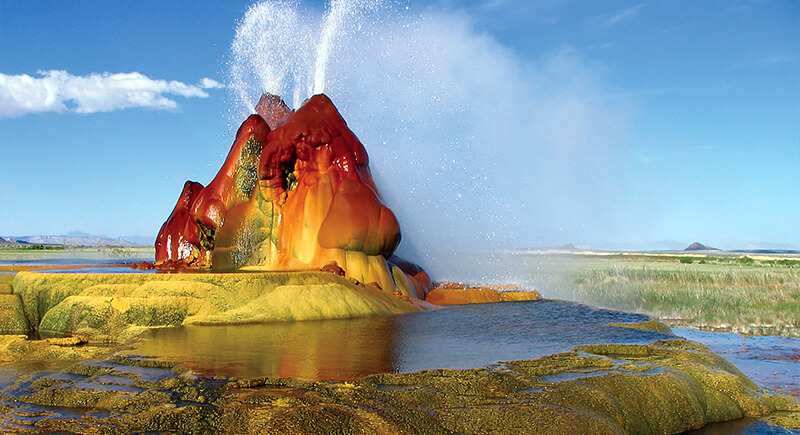
In 1964, a geothermal energy company drilled into the Nevada desert, hoping to tap hot water. The temperature proved inadequate, so they sealed the well and left. They sealed it improperly, and superheated water pierced through, thus creating a bizarre 12-foot technicolor monument. Heat-loving algae thrive in the shallow pools and cause reds, greens, and gold hues. Today, the geyser grows in size and changes shape in the middle of nowhere.
Lake Hillier, Australia
Credit: Wikimedia Commons
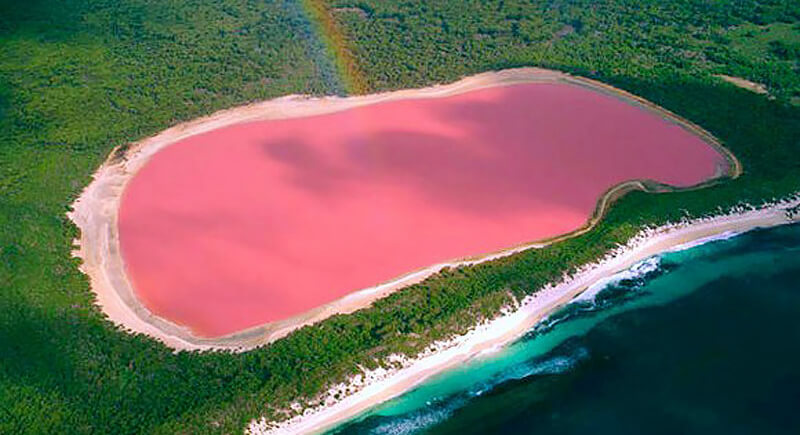
Scientists still debate why the water at Lake Hillier is bubblegum pink. Each day, this 2,000-foot-long lake on Western Australia’s Middle Island glows bright pink against dark blue ocean and lush green forest. Some theories say Dunaliella salina microalgae produce red carotenoid pigments that color the water. While science struggles to come up with an explanation, anyone flying over here can spot the salmon-colored mystery without any problem.
Atacama Desert, Chile
Credit: Wikimedia Commons
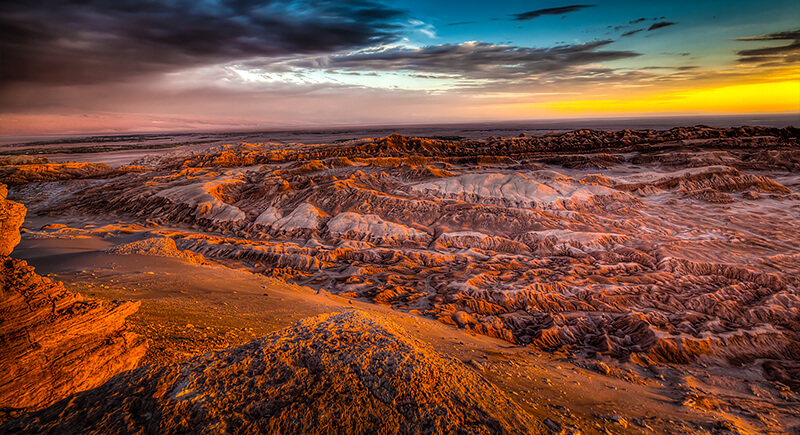
Northern Chile’s Atacama Desert receives less than 15 millimeters of rain annually across 40,000 square miles. Valle de la Luna, also known as Moon Valley, features cracked earth and towering salt pillars. Valle de la Muerte, also known as Death Valley, features harsh conditions and intense ultraviolet radiation that replicate the conditions on Mars. Ironically, the desert enjoys clear skies.
Zhangjiajie National Forest Park, China
Credit: Canva
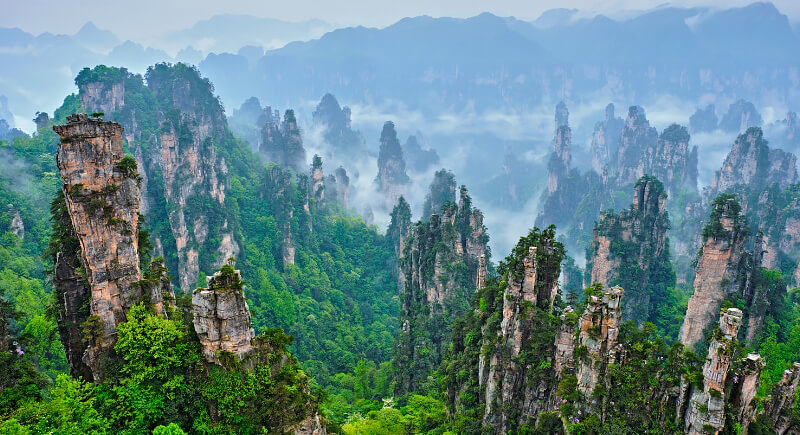
Towering quartz sandstone pillars rise straight from the forest floor in Zhangjiajie National Forest Park. Erosion shaped these formations over millions of years, with some reaching more than 3,000 feet in height. The landscape inspired the floating Hallelujah Mountains in Avatar. Visitors explore the area via glass bridges and cliff-edge walkways across the broader Wulingyuan Scenic Area, which offers sweeping views of the dramatic terrain.