The Ghost Town in Pennsylvania That Has Been On Fire for 60 Years
Centralia, Pennsylvania, grew out of coal. It became an official borough in 1866, though people had already settled there by the 1840s. Anthracite mining shaped the town’s pace, its jobs, and its future. By 1890, more than 2,700 people lived there, and rail lines carried coal to markets beyond the region.
Families built their lives around the mines, and the town held together even during the Great Depression. Everything depended on the coal under the ground. In the end, that same coal caused the problem that the town could not escape.
The Fire That Wouldn’t Stop
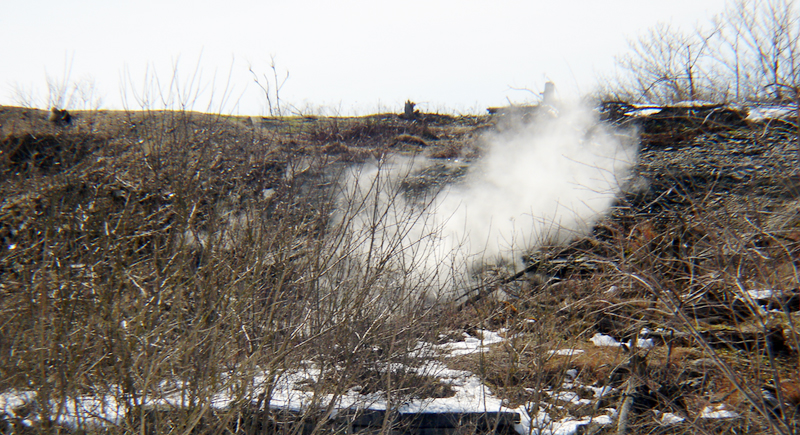
Image via Wikimedia Commons/Mredden
In May 1962, a fire, believed to have started in a landfill, spread into the network of underground coal mines beneath Centralia. Once it reached those tunnels, it gained access to a massive fuel source. The result was an underground fire that was difficult to reach and control.
Efforts to put it out began quickly. Over time, millions of dollars were spent trying to contain it. Early attempts alone cost around $3.5 million, and later efforts pushed that figure even higher. None of it worked. The fire kept moving through the mines, slowly expanding beneath the town.
Warning Signs
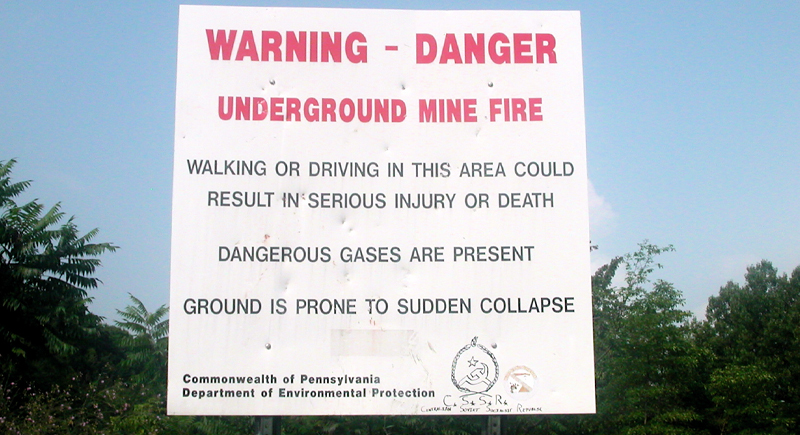
Image via Wikimedia Commons/Lyndi & Jason
The danger did not stay hidden underground. Cracks began to open in the ground. Smoke and toxic gases escaped through fissures. Some vents grew hot enough to cook food, a point demonstrated in 1982 by resident Tom Larkin, who used the heat rising from the earth to fry an egg.
In 1981, a 12-year-old boy fell into a sudden sinkhole that opened beneath him. He nearly died, and the incident made it clear how unstable the ground had become. Sinkholes, ash piles, and hidden vents created risks for both people and animals. At that point, staying in Centralia started to look less like loyalty and more like a gamble.
Relocation And The Slow Disappearance
By the early 1980s, officials were failing to extinguish the fire, and in 1983, the United States government approved about $42 million to relocate residents. Families were offered buyouts, and many chose to leave. Homes were demolished soon after, and entire blocks disappeared.
The process did not stop there. In 1992, Pennsylvania used eminent domain to take control of remaining properties. Over time, roads fell apart, including a section of Route 61 that became so damaged it could no longer be repaired and was eventually closed. By 2002, Centralia lost its ZIP code, and on paper, it was already fading.
The Residents Who Stayed
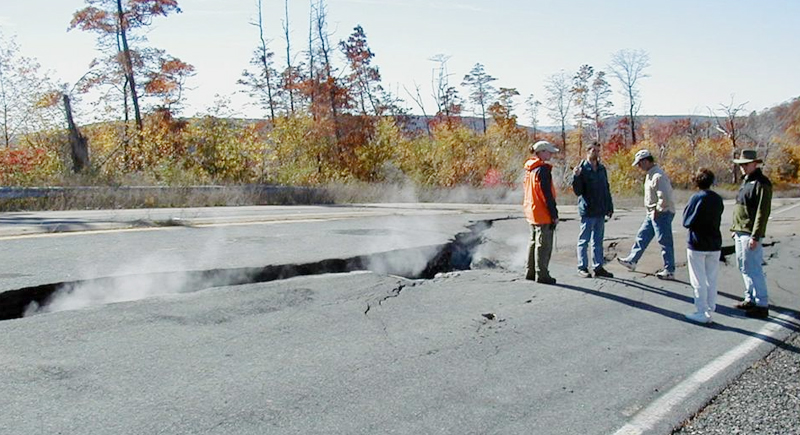
Image via Wikimedia Commons/James St. John
Not everyone left the town, and a small group resisted relocation for years, arguing that parts of the town were still safe. Among them was former mayor Lamar Mervine, who made it clear he intended to remain in the only home he had ever owned.
Legal battles followed. In 2013, a settlement allowed the remaining residents to stay for the rest of their lives. The agreement included a $349,500 payout and guaranteed that ownership would revert to the state upon their deaths. As of the 2020 Census, only five residents remained.
A Ghost Town With A Strange Afterlife
The fire in Centralia never stopped. It continues to burn hundreds of feet below the surface, spreading slowly through the old mine network. Temperatures underground can reach around 1,400°F, and experts believe it could keep burning for another century or more.
Despite the risks, the town still attracts visitors. People come to see the smoke rising from the ground and to understand how a place like this still exists. What remains of Centralia feels suspended between past and present, shaped by a fire that never fully left.
For the few residents who stayed, that attention is not always welcome. This is still their home, even as outsiders arrive to witness what is, for them, an ongoing reality rather than a story.