The Oldest Tree in the World Is Hiding in California, and You Cannot Visit It
Records show that there is a living tree that began growing around 2830 BCE, placing its birth more than a century before construction began on the Great Pyramid of Giza. It was already ancient when Julius Caesar ruled Rome. Scientists still monitor it because it holds answers about aging, survival, and how life stretches across extreme spans of time. Strangely, the exact spot where this organism stands is intentionally kept secret.
The Ancient Organism With A Biblical Name
The tree is called Methuselah, a Great Basin bristlecone pine (Pinus longaeva), and it grows inside California’s White Mountains within Inyo National Forest. Age estimates place it at 4,800 to 4,900 years old, depending on the measurement year, which also makes it one of the oldest known non-clonal trees on Earth. Non-clonal means it has persisted as a single organism across millennia.
Scientists determine a tree’s age by counting its growth rings. Each ring represents one year, and researchers extract a thin core sample instead of cutting the tree down. That technique allowed experts to estimate Methuselah’s germination around 2830 BCE. Interestingly, public access is restricted. The United States Forest Service protects the exact location to reduce vandalism and prevent root damage from heavy foot traffic. Visitors can hike nearby groves, but signs never point out the specific tree.
Why Bristlecone Pines Can Survive So Long
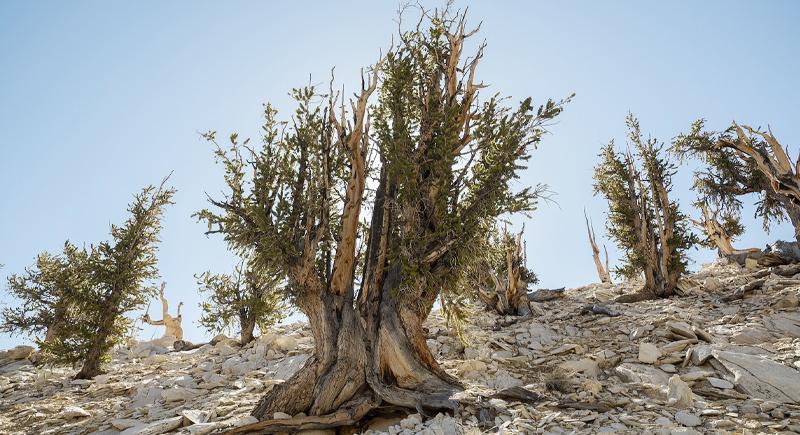
Image via Wikimedia Commons/Clyde Charles Brown
Bristlecone pines succeed in conditions many species cannot tolerate. These trees grow at elevations of 9,000 to 10,000 feet in rocky, moisture-limited soil, and some survive on less than 10 inches of water annually. Although their growth rate is extremely slow, this helps conserve energy and produces very dense wood, which resists insects, rot, and weather damage.
These trees also have high resin levels, which help fight disease. Research suggests a bristlecone can stay alive with only about 10 percent of its bark intact. Fewer nearby plants mean less demand for scarce nutrients and water. Over thousands of years, that survival strategy has proven highly effective.
Visiting The Forest Without Seeing The Tree
Travelers can still walk through Methuselah Grove inside the Ancient Bristlecone Pine Forest. The popular Methuselah Trail is about 4.5 miles and located above 9,000 feet in elevation. Hikers also explore the 3.5-mile Bristlecone Cabin Trail, and the roads typically stay open late spring through early fall because heavy snow closes access routes in winter.
The closest town is Big Pine, about 45 minutes away, and Bishop serves as a larger gateway city. Many visitors prepare carefully due to altitude, strong sun exposure, and a lack of water sources along trails. Other groves contain bristlecones older than 4,000 years. Some areas, like Patriarch Grove, hold the largest known bristlecone specimens.
A Living Link Across Human History
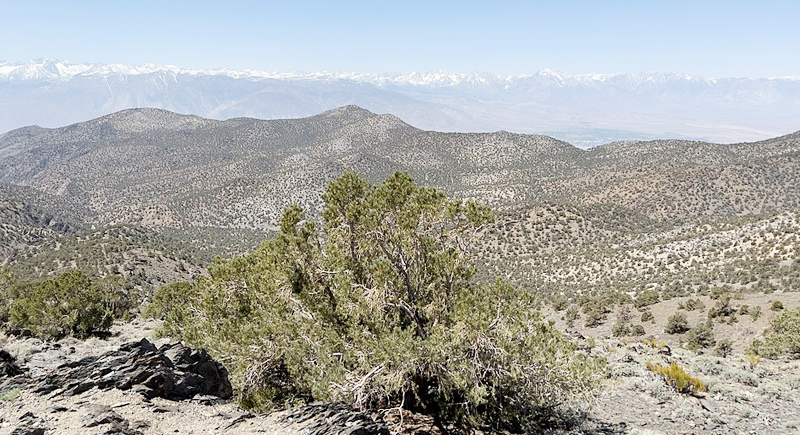
Image via Wikimedia Commons/Z3lvs
Methuselah began growing thousands of years before modern nations formed. It survived major climate shifts, volcanic eruptions, and countless seasonal cycles. Scientists continue studying bristlecones to track ancient climate patterns and long-term ecosystem changes.
Despite global fame, Methuselah remains protected in silence inside the White Mountains. The secrecy helps ensure the tree continues to survive for a long time into the future.