
Skip the white light, time your paddle, and use a black bucket test so the glow shows up in the water, not just in your photos.
Red light, not bright light
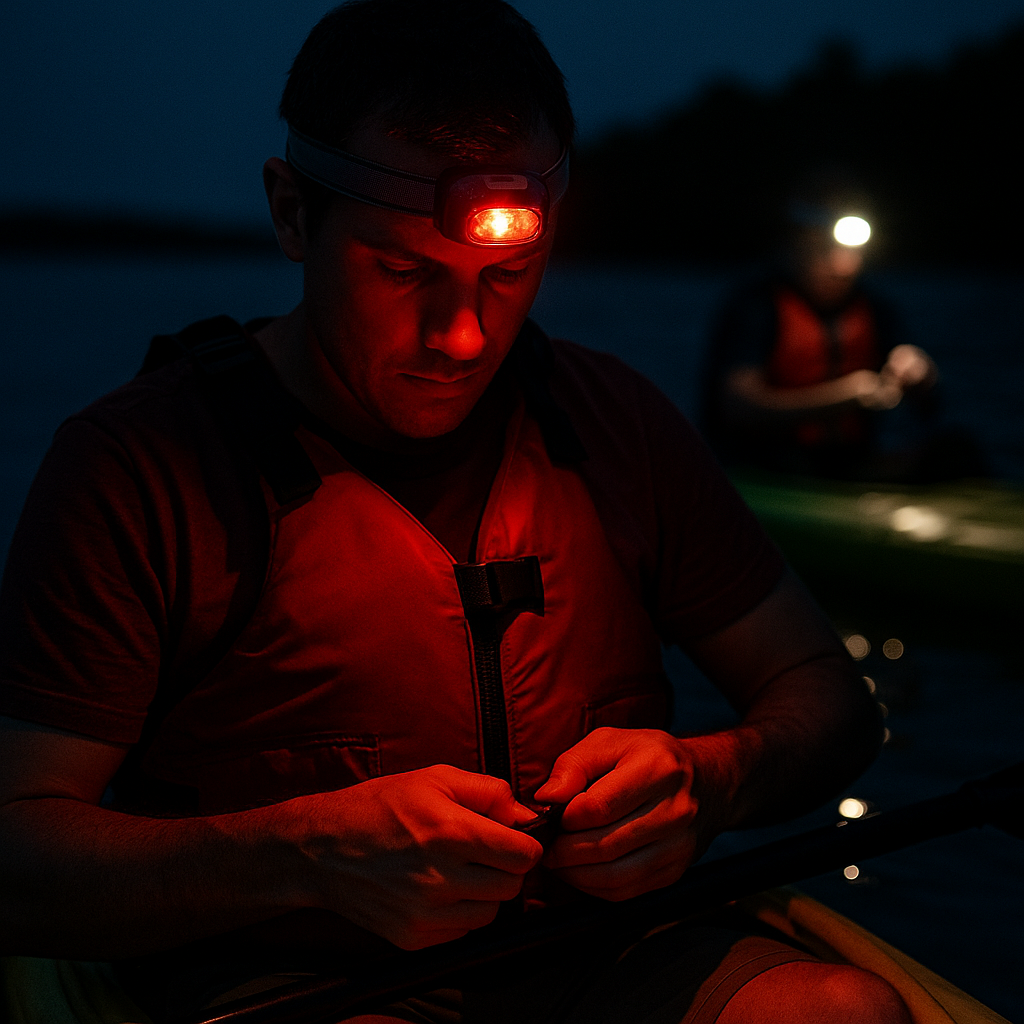
I learned this the hard way in a kayak line that looked like a slow-moving parade float. Someone in front of us clicked on a white headlamp to adjust a life jacket strap, and the bay went from magical to plain black water with a few annoyed whispers. Bioluminescent bays are dark-adapted experiences. Treat them like one.
If you bring one piece of gear, make it a headlamp that can run in red mode (or one with a red filter). Red light is dim enough that your eyes keep their night vision, and you can still see your PFD buckles, the paddle leash clip, and where you stashed your phone. I keep mine pointed at my chest, not out over the water, and I use the lowest setting that lets me do the job. This is also where a simple rule helps: if you can't point it at your own gear, don't turn it on.
A couple of practical moves that have saved our group from the constant on-off circus: do all the fiddly stuff before you launch. Tighten your seat back. Adjust your foot pegs. Clip your dry bag. Put your bug spray on while you can still see what you're doing without blasting a beam into everyone's eyes. If you're joining a guided paddle, ask at the dock what their light policy is, because the good outfits will have one and they'll be relieved you asked.
And yes, your phone flashlight counts as white light. If you need a quick check, cup the screen in your palm like you're shielding a candle and keep it aimed down into the boat. It feels fussy until you see the water spark when you stop messing with the light. That's the point.
The black bucket test before you commit to a long wait
Here's the thing nobody wants to say out loud when you're planning: bioluminescence isn't a light show on demand. It's living plankton doing their defensive sparkle thing, and conditions change. If you show up on a low-glow night, you can either sulk in the dark or you can at least know what you're dealing with before you burn two hours waiting for a miracle.
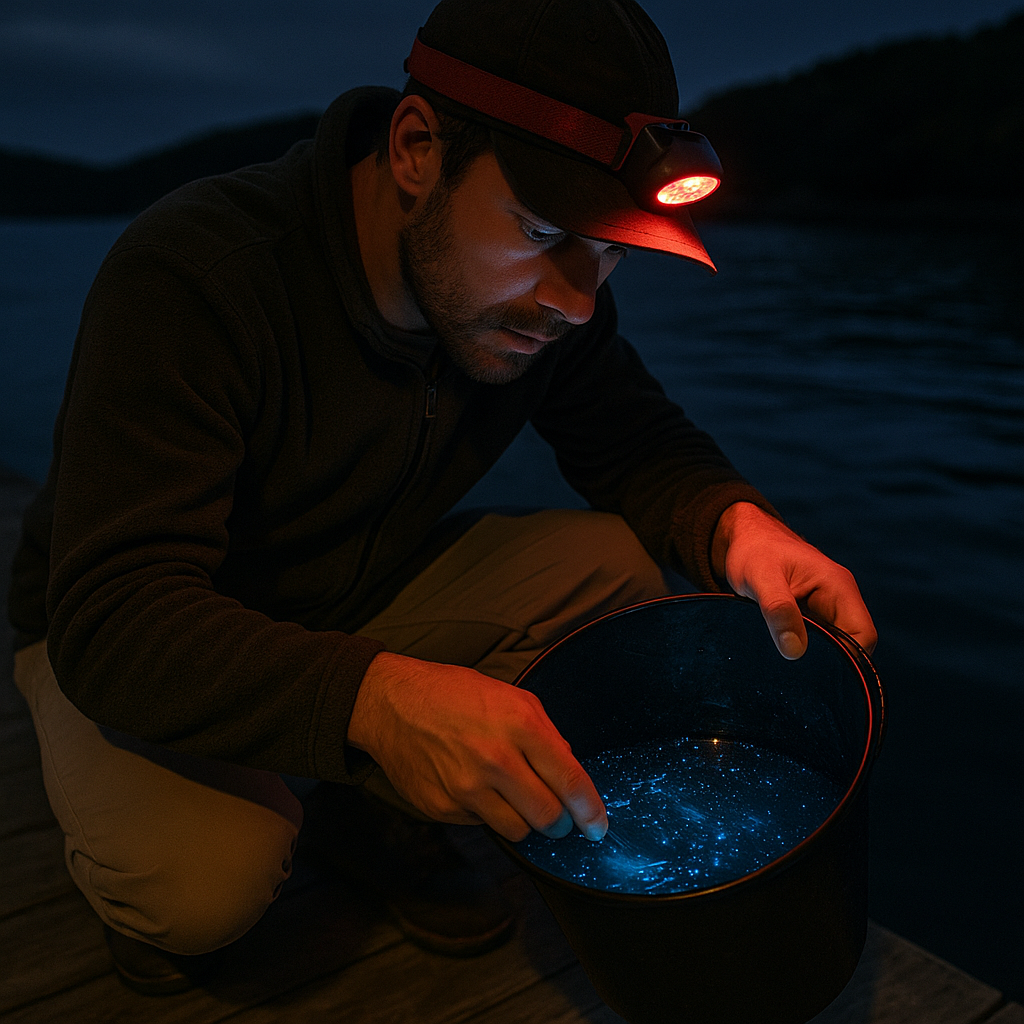
My low-tech favorite is the black bucket test. Bring a small black plastic bucket (or even a dark-colored dry bag you can hold open like a scoop). From a dock or shoreline where it's safe, dip it under the surface and pull up a couple gallons of water. Give it a gentle swirl. If there's bioluminescence around, you'll see little pinpricks and streaks inside the bucket even when the open water looks dead. It's not a promise that the whole bay will explode with glow, but it tells you the organisms are present and responsive.
Two details matter. First, do the test after your eyes have adjusted. If you've been standing under a parking lot light or staring at a GPS screen, step away for a minute. Second, don't whip the water like you're making batter. You want to see what a paddle stroke or a hand trail will do, not what a blender would do.
This also helps you set expectations with whoever you're traveling with. If the bucket shows nothing, you can pivot earlier: grab a late snack, do a different night walk, or reschedule for a darker night if you have flexibility. If the bucket sparkles, you can plan your time on the water around the best moments: slow paddling, hands in the water, a quiet drift where every little fish flicker reads like a tiny comet.
I like this test because it respects the place. You're not shining lights, you're not chasing wildlife, and you're not turning the whole shoreline into a phone-screen amphitheater. It's just a quick check that makes the rest of the night feel less like gambling.
Timing the tide so the glow isn't diluted
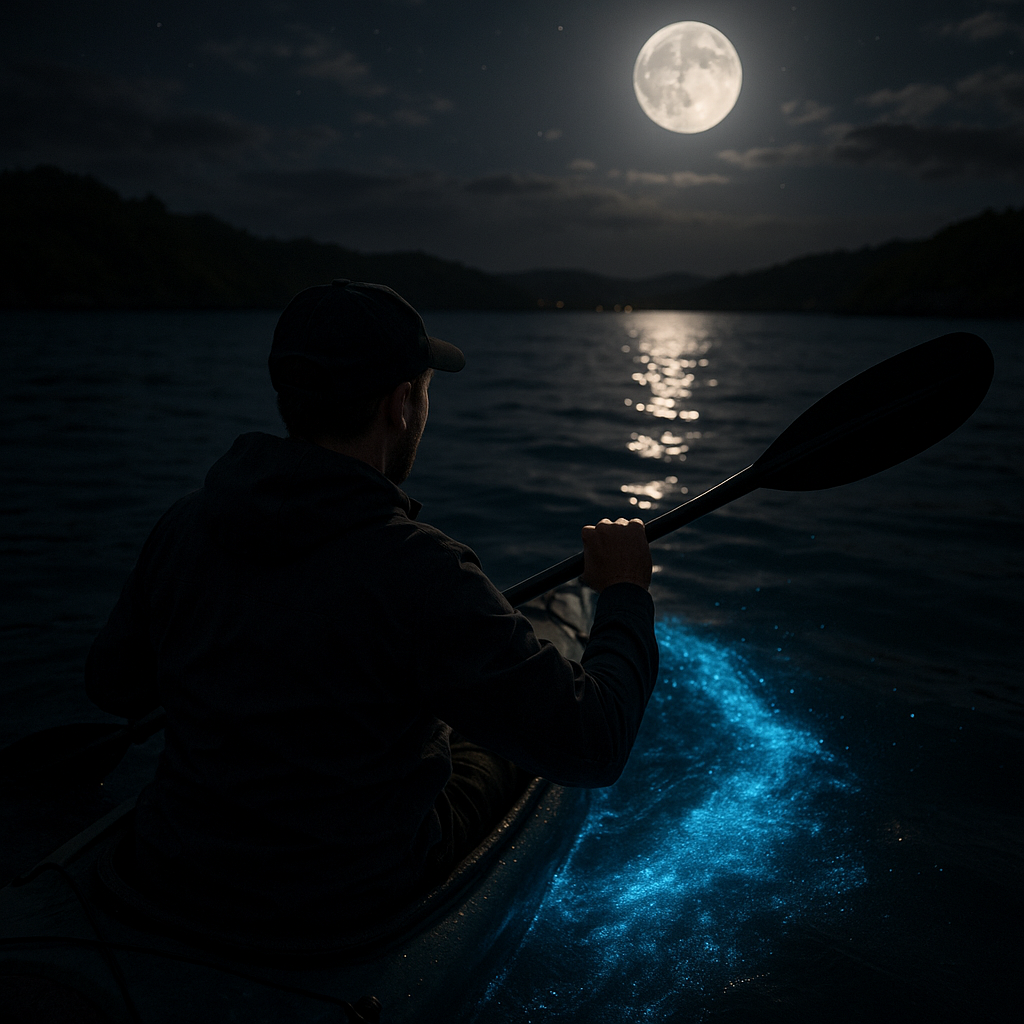
If you've ever wondered why one person's bioluminescent bay photos look like a constellation and yours look like a spilled cup of nothing, start with water movement. A lot of these bays glow best when they're not being flushed hard by ocean water. When the exchange is too strong, the concentration can get patchy, and the glow becomes something you have to hunt for instead of something that follows your paddle.
I plan around three unsexy inputs: moonlight, tide, and wind. Moonlight is the obvious one. A bright, high moon can wash out the scene even if the water is active. I try for a new moon window or at least a night when the moon rises late, so you get a darker hour or two. Tides are the next lever. In many bays, the slack portion around high tide can be a sweet spot because the water is calmer and the surface doesn't look like crumpled foil. I check a tide chart for the nearest harbor as a starting point, then I ask the local outfitter what timing they like for that specific bay. They run it nightly and they know the weirdness, like the channel that rips on an outgoing tide or the cove that stays calm even when the rest of the bay is moving.
Wind is the spoiler people forget. Even a steady breeze can chop the surface and make it harder to see the fine sparkles. It also changes how comfortable the trip is in a kayak, because you end up correcting your course the whole time. If you can pick a night, pick the quieter one. If you can't, pick the more protected launch and keep your expectations sane.
On the water, slow down. The glow is most satisfying when you can watch it trail off your paddle blade and fade behind you. Fast strokes make it look like static. I also like to pause in a darker pocket away from other groups, trail my fingers in the water, and just let my eyes catch up. That's usually when the bay finally looks like the stories.