Time is Running Out to See the Crown of the Continent at Glacier National Park
Glacier National Park still feels vast when you arrive. The mountains rise the same way they always have, the lakes stay clear, and the valleys stretch out without interruption. On the surface, it looks unchanged.
But the glaciers that gave the park its name are steadily retreating. Many have thinned out, and some no longer meet the scientific definition of a glacier. What’s left is still striking, but it reflects a landscape in motion rather than one frozen in time.
Visiting now means seeing this place at a turning point. It’s not just about the scenery. It’s about understanding how it’s changing, and what that shift looks like up close.
Why It’s Called The Crown Of The Continent
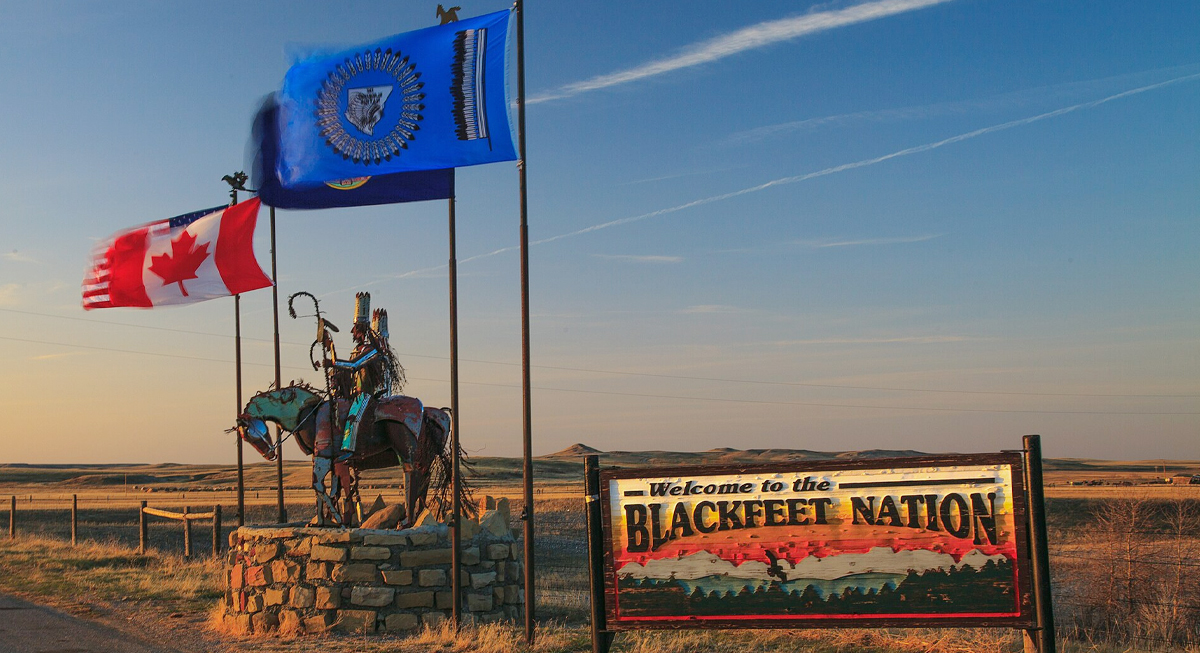
Image via Wikimedia Commons/Murray Foubister
Long before it became a bucket-list destination, this region held meaning for the people who lived closest to it. The Blackfeet referred to it as the “Backbone of the World,” a name that captured its physical and cultural significance. In 1901, conservationist George Bird Grinnell gave it another identity, calling it the “Crown of the Continent” to reflect its ecological reach and influence.
That label stuck for a reason. Glacier is located at the center of a vast system of mountains, watersheds, and wildlife corridors that stretches beyond the park itself and into Canada. It isn’t just a protected area. It’s one of the most important connected ecosystems in North America, later recognized as an International Peace Park in 1932 and a UNESCO World Heritage Site in 1979.
This is the context most visitors don’t fully grasp at first. They arrive for the views, then realize they’re standing in something much bigger.
What It Feels Like To Experience It
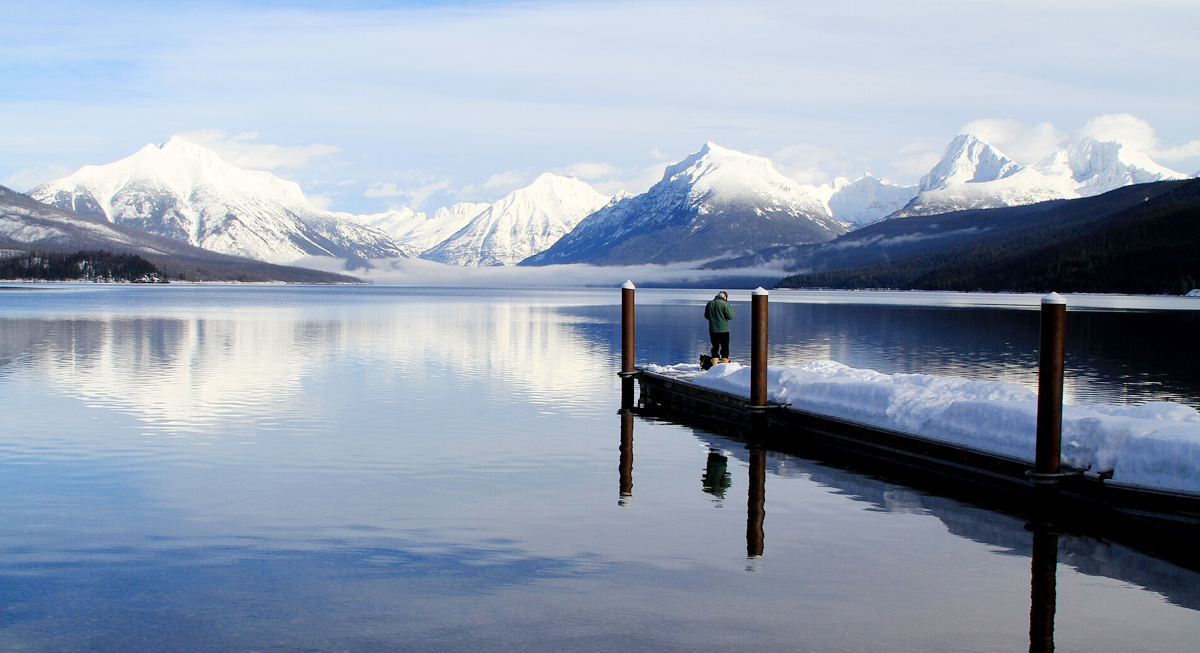
Image via Wikimedia Commons/David Restivo
The park covers more than 1 million acres, and the variety is immediate. Alpine peaks rise above forested valleys. Rivers cut through wide-open terrain. Lakes reflect whatever the sky decides to do that day.
The most direct way to take it all in is along Going-to-the-Sun Road, a drive that cuts through the park and climbs toward Logan Pass. Along the way, the landscape shifts quickly. Waterfalls drop beside the road. Glacial valleys open up without warning. At higher elevations, the scale becomes harder to process all at once.
Then there are the details that pull you in closer. Lake McDonald stretches out with clear, cold water. St. Mary and Virginia Falls carry more force depending on recent snowmelt.
At Jackson Glacier Overlook, one of the park’s remaining glaciers sits in view, giving visitors a chance to see what the park was once defined by. Right now, this view matters more than it used to.
The Glaciers That Defined The Park Are Changing
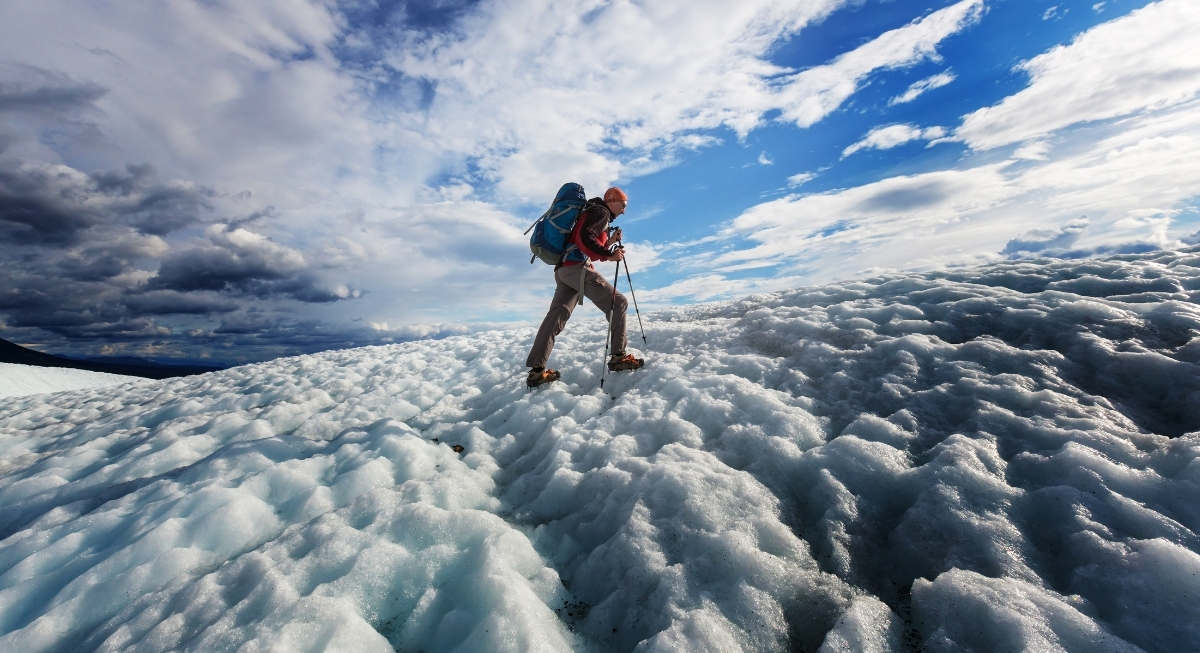
Image via Canva/Kamchatka
The name “Glacier” wasn’t symbolic. It described a landscape shaped by ice that carved valleys, fed rivers, and defined the terrain.
In the 1850s, between 80 and 144 glaciers covered what is now the park. By 2005, that number had dropped to somewhere between 32 and 49.
The change unfolded over decades, and it’s still happening now. Scientists tracking the park’s ice have found that the loss isn’t only about surface area. Glaciers are thinning, losing mass in a way one researcher compared to a balloon slowly losing air. Even when they appear stable from a distance, the volume is shrinking.
Some formations that still carry glacier names no longer meet the scientific definition. A true glacier must move and retain snow year-round. As ice recedes and movement slows, those definitions start to break down.
What Remains Won’t Look The Same
Earlier predictions suggested the park’s glaciers could disappear within decades. Those timelines have since shifted as researchers continue to refine their understanding.
Current research points to a future where ice is still present in the park, but in a different form. Larger glaciers are expected to shrink further, and some may vanish entirely. Others may remain as smaller, static ice patches. But a landscape with scattered ice patches is not the same as one shaped by active glaciers.
Glacier National Park is still extraordinary in terrain and experiences that draw people here. You can still stand at an overlook and see a glacier. You can still drive through valleys shaped by ice. What you won’t be able to do forever is see it in the same state.
The Crown of the Continent isn’t disappearing overnight. It’s changing piece by piece, season by season, year by year. And that makes the timing of a visit matter more than it ever has before.