Venice Isn’t Floating: The City Is Actually Built on Ancient Wooden Piles
Venice has survived fires, floods, invasions, careless renovations, and a tourist count that would break most cities by lunch. The city is 1,600 years old because its foundations work. The buildings stand because of a deliberate construction system designed for unstable ground, repeated across the lagoon on a massive scale. Most cities built on water tend to fail quickly, but Venice did the opposite. Its survival depends on a choice that still surprises engineers and exposes how wrong the floating-city myth really is.
The Lagoon Problem Nobody Could Ignore
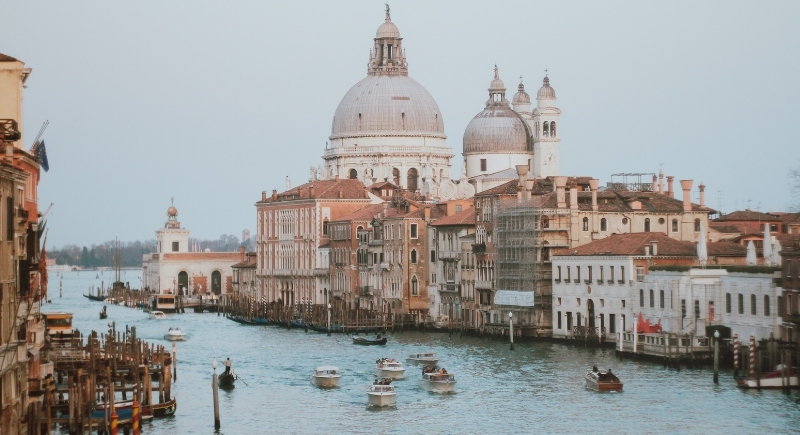
Image via Pexels/Anastasiya Lobanovskaya
Venice did not grow out of confidence but out of fear. Early settlers escaped violence on the mainland and landed in a lagoon that offered safety but very little else. The ground shifted, water pushed in daily, and solid land barely existed. Leaving was easier than building, but people stayed. Stone buildings came later. Before that, homes stayed low and light to avoid sinking. As trade expanded and power followed, wood and mud had to support the weight they were never meant to hold. That forced builders to rethink what a foundation could be.
Wooden Piles, Driven Deep and Packed Tight

Image via Getty Images/marchello74
The solution relied on trees. Workers drove short wooden piles into the lagoon floor until they hit dense clay, but surprisingly, these piles did not reach bedrock. Instead, they relied on friction and compression. Builders packed the piles so closely that the soil pressed hard against them, and pressure did the rest.
Bacteria still attacked the wood, but it was a slow process. Water filled the weakened cells, helping the piles keep their shape. Millions of piles went into the lagoon. Under the Rialto Bridge alone, records indicate approximately 14,000, and large structures used thousands more. On top of the piles, workers laid thick wooden planks and beams, then added stone. The system spread weight across the mud instead of fighting it.
Why the Wood Still Holds
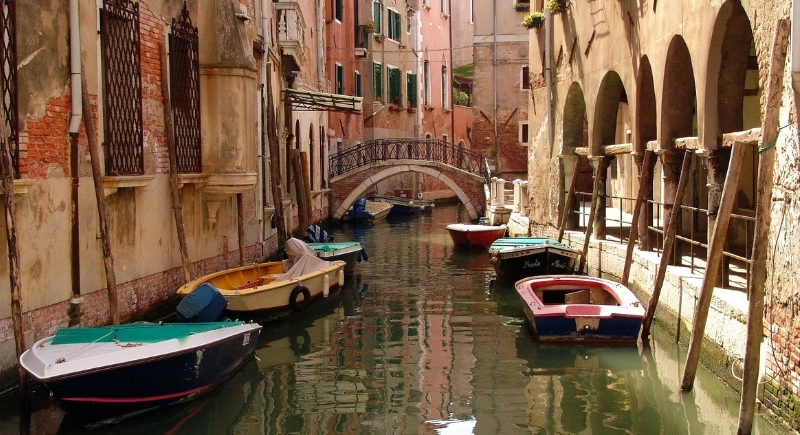
Image via Pixabay/travelspot
Wood, water, and soil are interdependent. Remove one element and the system fails. The water keeps oxygen away, the soil holds the piles in place, and the wood absorbs pressure without cracking. Modern materials often aim for permanence through strength alone. Venice survives through cooperation. That difference explains why concrete foundations typically have a 50-year design life, while buildings like the San Marco Basilica have stood for more than a thousand years. This design also explains why repairs cause anxiety. Exposing old piles to air can trigger rapid decay. Restoration crews work fast and keep everything submerged for a reason.
Sinking Was Always Part of the Deal
Venice started sinking the moment the first stone was laid because weight compresses the mud, and water squeezes out. The city drops a little more each year, often measured at one to two millimeters, and that slow descent adds up. Some bell towers have sunk more than two feet since construction. High tides now flood areas that once stayed dry.
The foundations are still intact, but rising sea levels and stronger tides are pushing the system closer to its limits. The city’s defenses primarily focus on controlling water. Barriers block extreme tides, and rules limit heavy ship traffic, but none of this changes how Venice stands. It only buys time.