Why the “Pan-American Highway” Was Never Finished (And the Dangerous Gap That Remains)
The Pan-American Highway was designed to connect the entire Western Hemisphere by land. In theory, it would allow uninterrupted travel from Alaska to the southern tip of South America. But that journey still isn’t possible. One short stretch of land between Panama and Colombia has prevented the highway from ever becoming continuous.
That break, known as the Darién Gap, is not an oversight or an unfinished construction project awaiting completion. Decades after the rest of the route took shape, this section remains the only place where the road simply ends, and the reasons it does reveal far more than a missing piece of infrastructure.
A 60-Mile Break in a Continental Route
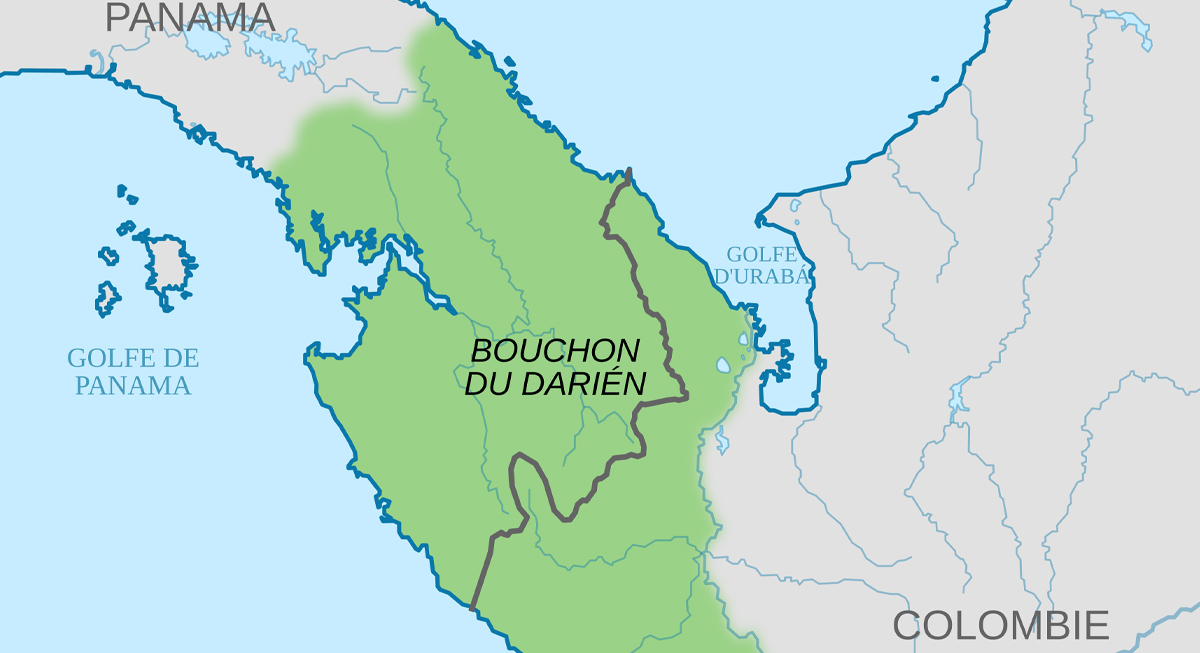
Image via Wikimedia Commons/Milenioscuro
The Darién Gap is roughly 60 miles long, yet it interrupts an otherwise connected system of roads spanning two continents. On maps, the endpoints are clear. The highway reaches Yaviza in eastern Panama and resumes again near Turbo in Colombia. What lies between them is not a missing pavement project waiting to be completed, but a region where road construction has repeatedly stalled.
This is not due to a lack of ambition. Plans to connect the continents date back to the early 20th century, and a formal agreement to build the Pan-American Highway was signed in 1937. Over time, most countries completed their segments, leaving the Darién Gap as the only significant break in the network.
Why the Road Was Never Built
Image via Pixabay/TungArt7
Several factors have kept the gap from being developed, and none of them exist in isolation. The terrain is one of the most immediate barriers. The region combines dense rainforest, swamps, fast-moving rivers, and steep hills.
On the Colombian side, the Atrato Swamp creates waterlogged conditions, while parts of Panama rise into mountainous terrain. Building a stable road through that mix would require extensive engineering and constant maintenance.
Environmental concerns have been just as influential. The Darién region is one of the most biodiverse areas in the Americas, and large-scale construction would disrupt ecosystems that remain relatively intact. Past proposals in the 1970s and 1990s were halted in part because of these concerns, along with fears of deforestation and long-term environmental damage.
Public health and agriculture have also shaped decisions. Officials have long warned that a continuous land connection could allow livestock diseases, particularly foot-and-mouth disease, to spread more easily between continents. For ranchers in North America, that risk carries significant economic consequences.
There are also political and social considerations. Indigenous communities live within the region and have opposed large infrastructure projects that would alter their land and way of life. In addition, some governments see the gap as a natural barrier that limits the movement of criminal networks and reduces cross-border pressures tied to trafficking and migration.
The Gap as It Exists Today
Despite the absence of a road, the Darién Gap is not empty. Thousands of people cross it every year, most of them migrants traveling north. In 2022 alone, around 250,000 people made the journey through the region.
The conditions are harsh. Travelers face flooding rivers, unstable terrain, wildlife, and the risk of encountering armed groups or smugglers. Deaths are recorded each year, and many more are believed to go unreported.
Lack of infrastructure makes the journey especially dangerous. There are no reliable emergency services, limited communication networks, and few safe routes through the jungle. What exists instead is an informal system shaped by necessity, where people rely on guides or smugglers to navigate an area that remains largely beyond state control.
A Missing Link With Economic Consequences
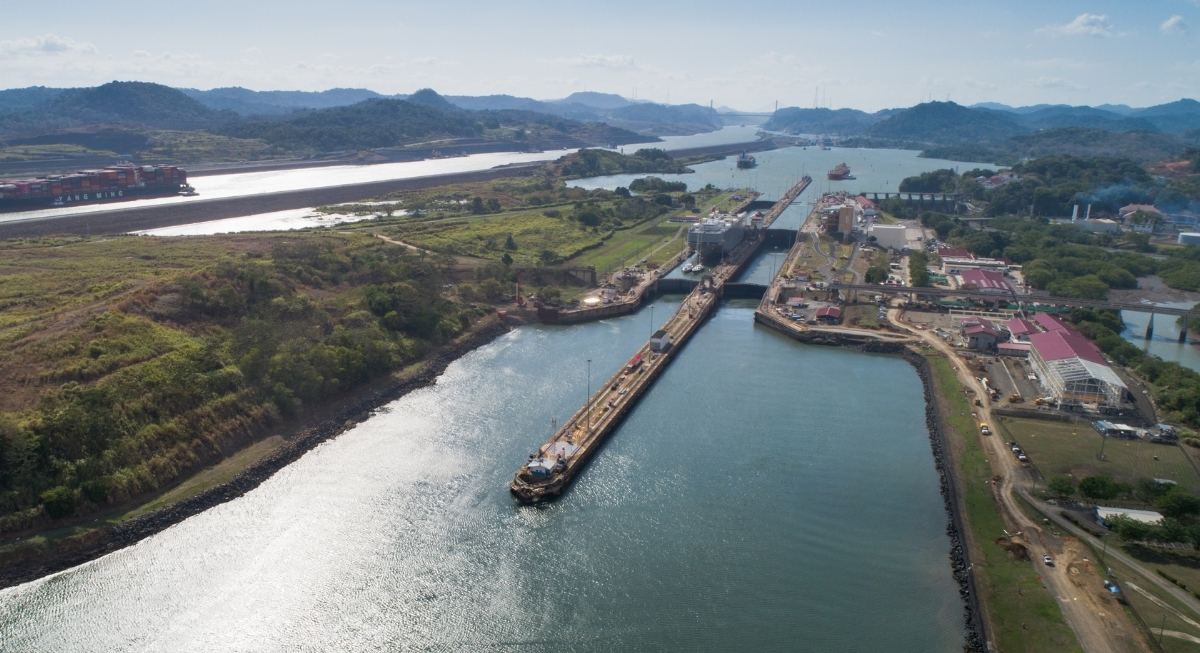
Image via Getty Images/Faustino Sanchez
The unfinished stretch affects more than travel. Without a direct land connection, goods moving between Central and South America must be transported by air or sea. Air freight can cost several times as much as road transport, and shipping routes often take significantly longer. This adds friction to trade between two regions that are otherwise geographically connected.
The gap’s proximity to the Panama Canal highlights that inefficiency. One of the world’s busiest trade corridors lies nearby, yet overland transport between neighboring countries remains limited. The absence of a road does not stop commerce, but it changes how that commerce moves and at what cost.
Why It Remains Unfinished
Over the decades, multiple proposals have sought to close the gap, but none have advanced. Each effort has had to contend with the same set of challenges: difficult terrain, environmental protection, public health concerns, political resistance, and high costs. Even alternative ideas, such as ferry routes, have struggled to remain viable.
The idea of a single road linking Alaska to Argentina remains compelling, but the Darién Gap has proven resistant to that vision. For now, the highway ends where the jungle begins.